From: phoebus@iinet.net.au
Sent: Sunday, September 10, 2017 12:09 PM
To: 'editor@aviationfirejournal.com' <editor@aviationfirejournal.com>
Subject: Suggested Article Topic
to: editor aviationfirejournal
Many (if not most) supplementary oxygen-related (or -initiated) fires occur on the ground during replenishment or systems maint, however some are just as likely to occur in the air and pose unique problems for flight crews (as well as accident investigators).
Because supplementary oxygen systems often have only their HP ON/OFF cocks remoted at the bottles, and no alternate way of restricting or removing flows to a HP oxy-leak, it’s always unlikely that a flight crew will have time to identify such a fire as being oxygen-related - and get to isolate that bottle supply in time. The time available factor is going to be very different to a smelly “fire of unknown origin” emanating from a Swissair 111 type scenario of a wiring-initiated fire.
Once an oxygen fire takes hold, it will have some very unique properties – and the airborne pressurized variant will be entirely different to that same cause fire arising in an aircraft on the ramp. Due to oxygen enrichment levels being related to detected (or undetectable) leaks inside a virtually hermetically-sealed flight-deck airborne, its aerial flashover characteristics in a pressurized fuselage can also be restricted to being very particular to this genre of accident scenarios. Tell-tale signs for crash investigators may be the extent to which the plastics technology found in the modern flight deck has been affected (LED screens, switches, solenoid holds, switch surrounds, circuit-breaker trips, crazing of transparencies, surface effects on differing plastic types on consoles, seats etc). Shielding by pilots’ bodies and seat structures and directionality of flame-front propagation might also allow discrimination of a point source.
As per many oxygen ground fires, the distinctive signature of a fuselage burn-through seems to presage the next destined development in an airborne oxygen fire scenario…. i.e. that of rapid depressurization. One must then reflect upon the consequent conundrum for the pilots. In any other depressurization scenario, the pilots are 100% reliant upon 100% oxygen and an emergency descent as being the safe extrication from their predicament. This is not so in an airborne supplementary oxygen fire that leads to a hull rupture. But, due to their oxygen's involvement, that conclusion is admittedly dependent upon a number of other factors. But it's very likely that their life-saving oxygen supply will be cut off by any oxygen leak and/or fire. So, as Shakespeare said: "...and therein lies the rub".
But then a normally unasked question pokes its head up. “What happens to an oxygen fire on the flight-deck once a point-source oxygen fire, supported by the ballooning outwards pressures of pressurization, causes a fuselage rupture?” Obviously that fire will be quenched almost immediately. But did the flash-over cause sufficient damage to systems to cause a subsequent crash? Or could the aircraft fly onwards until fuel exhaustion (per MH370)?
Deficient design characteristics of oxy systems have been identified in accidents over the years, even in modern aircraft. NASA maintains a whole unit dedicated to cataloguing oxygen fire related accidents and incidents. For instance the Canadian TSB found that aluminum HP oxygen lines with a low melting point were a factor in SR-111 (whereas high melting-point stainless steel is the minimum spec for oxygen lines). Investigators in other accidents have commented that, due to rubber-lined stand-offs, many aircraft don’t have any earthing of oxygen lines between the bottles and the distant overpressure burst discs on the fuselage side. Proximity of lines to electrical wiring and even tie-offs of electrical wire bundles to HP oxygen lines have featured in many other accident reports (e.g. 767 ramp fire destruction at San Francisco Intl ).
However because there have been numerous ramp fires emanating from oxygen systems that tend not to arouse much interest (because instant evacuation has always been the solution), it is always necessary to extrapolate the circumstance into the aerial variant – and to comprehensively entertain the differences in terms of complications and likely outcomes.
If you would like to read further into these MH370 prognostications see:
a. Executive Summary: at http://tinyurl.com/gqpnwcn
b. “MH370 (Not really a Mystery)” at http://tinyurl.com/or9bzf2
|
Accident: ABX Air
Cargo B762 at San Francisco on Jun 28th 2008, on fire while
parked, no arson
a. Executive Summary: at http://tinyurl.com/gqpnwcn
b. “MH370 (Not really a Mystery)” at http://tinyurl.com/or9bzf2
By Simon Hradecky, created Tuesday, Feb 23rd 2010 21:13Z, last updated Tuesday, Feb 23rd 2010 21:17Z
By Simon Hradecky, created Tuesday, Jul 22nd 2008 22:36Z, last updated Wednesday, Jul 1st 2009 06:42Z
By Simon Hradecky, created Thursday, Jul 3rd 2008 20:17Z, last updated Wednesday, Jul 1st 2009 06:42Z
By Simon Hradecky, created Sunday, Jun 29th 2008 07:01Z, last updated Wednesday, Jul 1st 2009 06:41Z
|
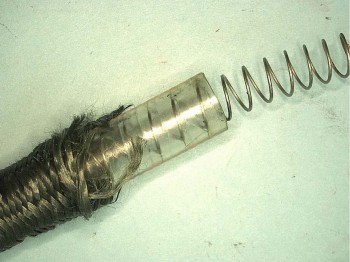
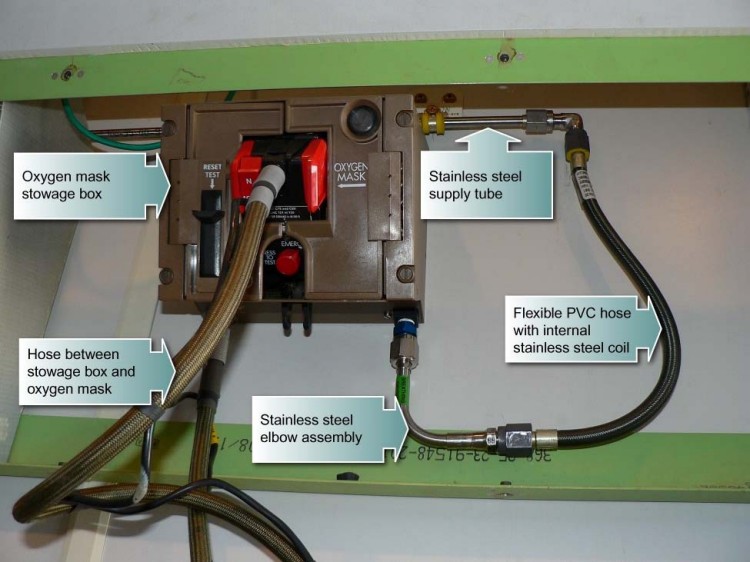
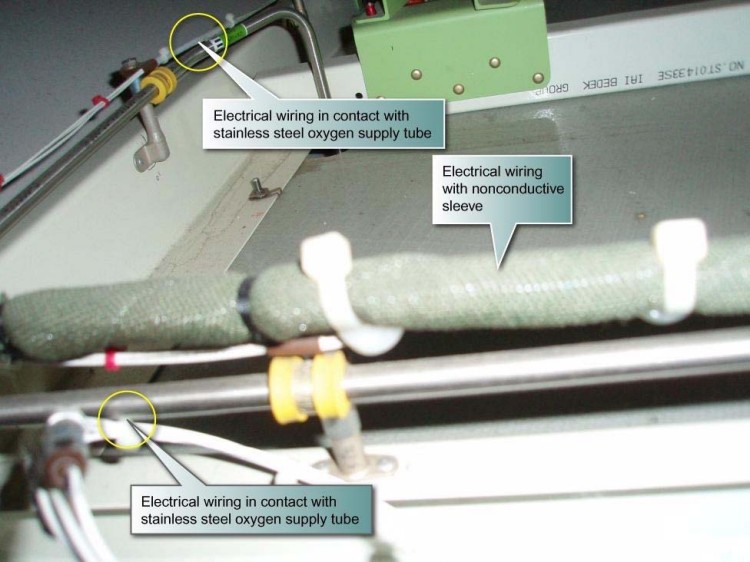
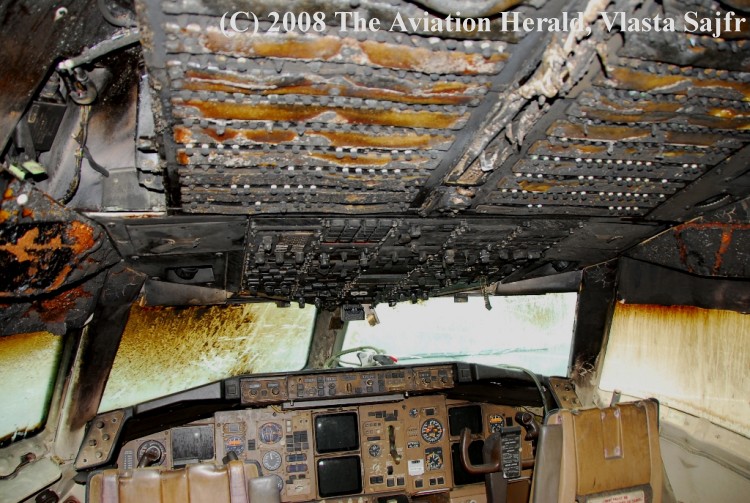
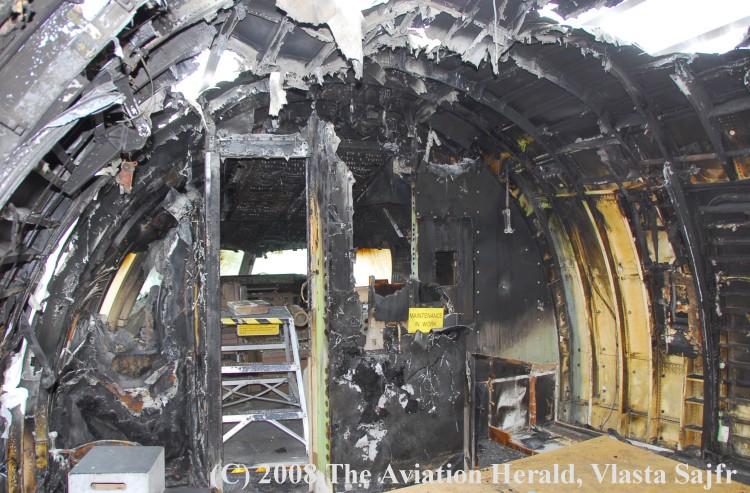
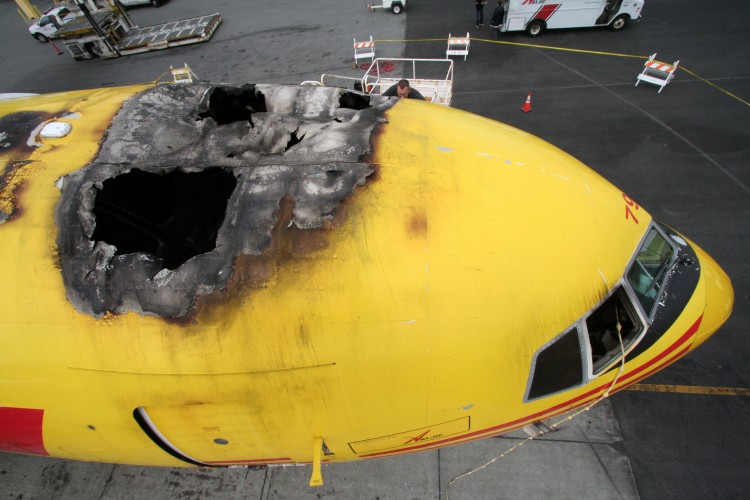
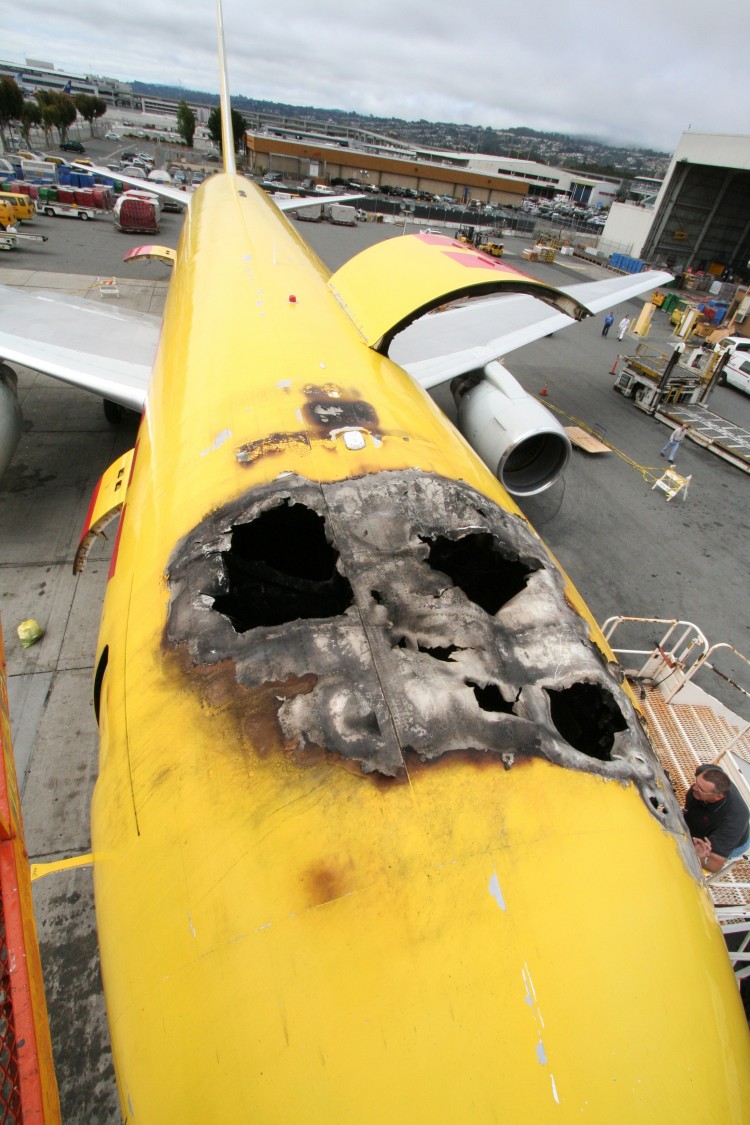
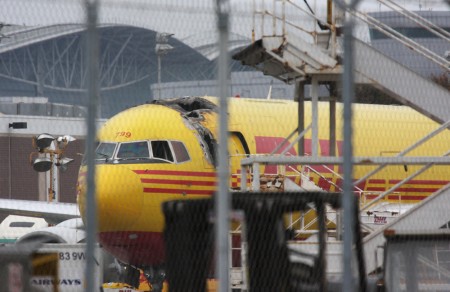 An
ABX Air Boeing 767-200, registration N799AX
preparing to perform freight flight GB1611 from
San Francisco, CA to Wilmington, OH (KILN)(USA),
was parked at the ramp, plot 11, with engines
shut down to be loaded and fueled, when fire
broke out immediately behind the cockpit. The
two pilots were on board, one received minor
injuries and was brought to hospital. The Air
Mail facilities (including DHL and USPS) with
more than 100 workers have been evacuated as
well.